
CaliClaims Law
one call. that's all
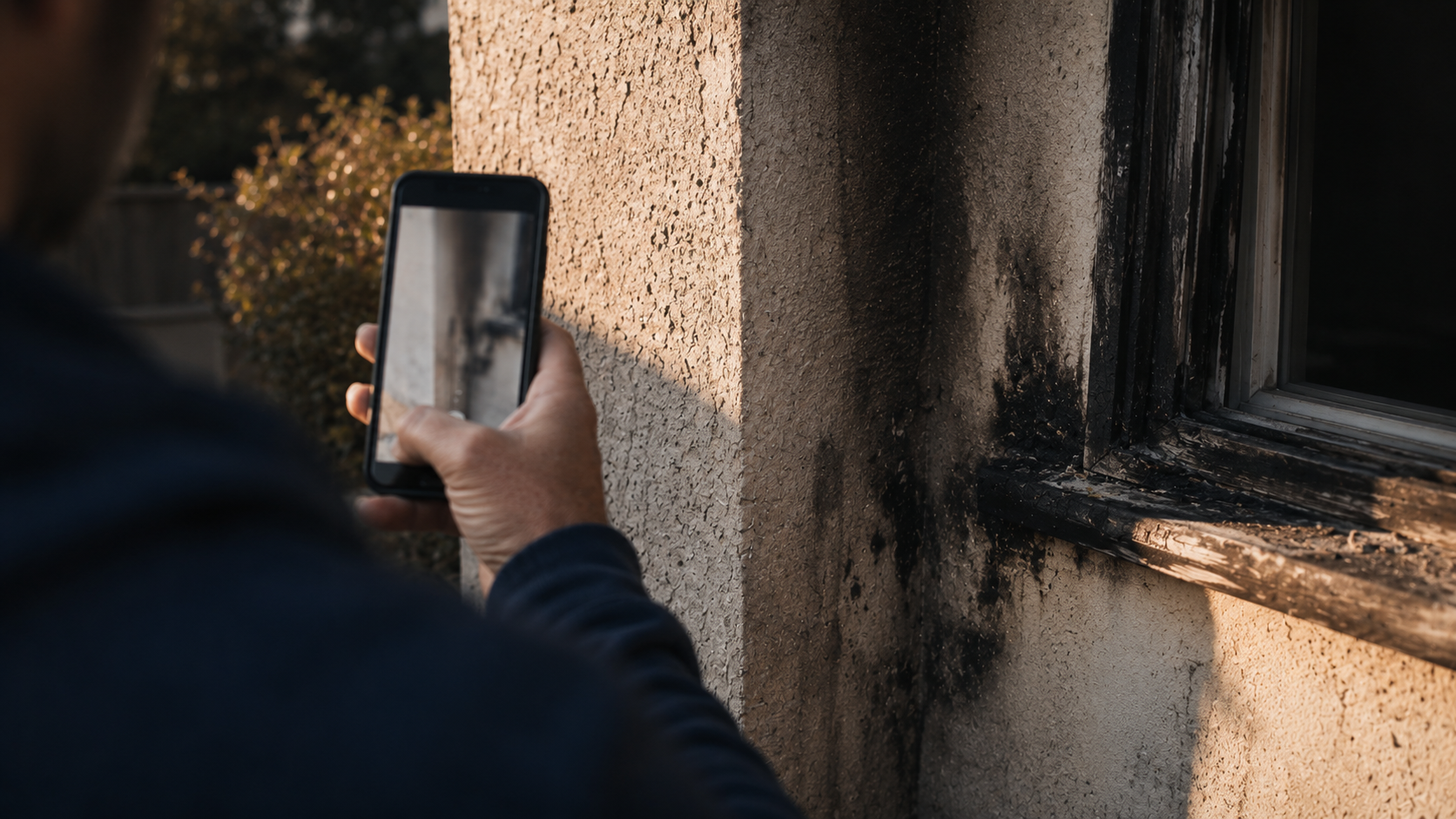
A house fire compresses years of decisions into a few weeks. Where will you live, who will clean the property, which contractor gets the job, and what do you tell the insurance company, all while the loss is still fresh. The insurance claim sits underneath every one of those decisions, because it decides what gets funded.
California homeowners policies generally treat fire as a covered peril, and carriers rarely dispute that a fire happened. The friction comes later, in the estimate that arrives thousands of dollars below the contractor's number, in the partial payment that stalls the rebuild, or in the adjuster who treats smoke residue as a cleaning item rather than a loss.
This guide walks through how a California fire claim actually proceeds, where the disputes concentrate, and what a policyholder can do at each stage. Coverage always depends on the specific policy language and the facts of the loss.
After notice of loss, the carrier assigns an adjuster, inspects the property, and produces an estimate. On a serious fire, that estimate splits into pieces: dwelling repairs under Coverage A, other structures under Coverage B, personal property under Coverage C, and additional living expenses under Coverage D. Each piece has its own limit, its own documentation demands, and its own timeline.
Payment usually arrives in stages rather than as one check. Carriers commonly issue an initial payment based on actual cash value, holding back depreciation until repairs are completed, and they pay contents and living expenses as receipts and inventories come in. A fire claim can stay open for many months, and larger losses often take longer.
The staged structure is normal. What is not normal is a claim that goes quiet, an estimate that never gets explained, or a carrier that keeps reopening questions it already asked. Those are the patterns that tend to separate an ordinary claim from one that needs pressure.
Know the difference between the people handling the file. The field adjuster who walks the property often has limited authority, and the desk adjuster who controls payments may never see the house at all. When the estimate misses obvious damage, a written request for re-inspection, with your contractor present and a list of the specific items to be examined, is a routine and effective tool. Carriers grant these regularly, and a re-inspection conducted with both estimators standing at the same wall resolves disputes that months of emailed photographs cannot.
Before the disputes, understand the arithmetic of the first check. It reflects the carrier's estimate, minus the deductible, minus withheld depreciation, and sometimes minus prior advances, so a number far below the estimate on its face may be mechanically correct and still built on an estimate that is too low. Separate the two questions. The math of the check is verifiable in minutes. The adequacy of the estimate underneath it is the real subject of everything that follows.
Scope of repairs is the biggest one. The carrier's estimate may price a patch and repaint where the structure needs framing, electrical, and drywall replaced. Line items go missing, quantities run short, and labor rates lag what Southern California contractors actually charge. The gap between the carrier's scope and a rebuild scope is often the entire dispute.
Like kind and quality is the second. Policies generally promise repair or replacement with materials of like kind and quality, and carriers sometimes read that phrase down, matching custom finishes with builder grade, or replacing part of a surface and leaving a visible mismatch. What counts as a true match is a recurring fight on California fire claims.
Valuation questions follow close behind: how depreciation was calculated, whether code upgrade coverage was applied when permits force modern standards onto an older home, and whether the dwelling limit is even adequate for current rebuild costs. Smoke and ash add a further layer, since residue can spread far beyond the burn area and carriers often want to clean what should be replaced.
Underinsurance is the fight nobody picks and everybody inherits. Rebuild costs in Southern California have climbed faster than many dwelling limits, and a serious fire is where the gap surfaces. When it does, the questions become whether extended replacement cost endorsements apply, whether the limits were set on the carrier's or agent's own replacement cost estimates, and whether every other coverage in the policy is being squeezed to fill a hole the limit created. Those questions have answers, and they are worth asking before accepting that the policy simply ran out.
Additional living expenses generate their own disputes about what qualifies and how long payments continue. Each of these issues has its own article in this series, and each one is worth pressing on its own terms rather than accepting as a package.
The dwelling repair is the headline, and several smaller claims run underneath it, each with its own rules. Personal property gets paid off an inventory the policyholder builds, item by item, with age, description, and replacement cost, and the inventory's quality directly sets the payment. High value items like jewelry, art, and instruments may sit under special limits unless separately scheduled, which is worth discovering from the policy rather than from a shortfall.
Outdoor losses follow their own math. Trees, shrubs, and landscaping typically carry capped allowances per item and in total, detached structures draw on their own coverage, and debris removal has defined room of its own. None of these categories is large by itself. Together, on a serious fire, they are real money that goes uncollected simply because nobody itemized them.
Take reasonable steps to prevent further damage, since policies require it, and photograph the property before anything is moved, discarded, or cleaned. Wide shots, room by room detail, and close ups of damaged materials all matter later, when memory fades and the debris is gone.
Request a certified complete copy of the policy, including the declarations page and every endorsement. Coverage questions get decided on the actual policy language, and the version in a drawer is often outdated or incomplete.
Keep every receipt tied to being displaced: lodging, meals above the normal grocery bill, storage, pet boarding, mileage. Additional living expense coverage pays documented increases in cost, and reconstructing the file months later never works as well.
Have a contractor you choose write a complete scope of repairs. Comparing that scope line by line against the carrier's estimate exposes missing items and short quantities, and it converts a feeling that the number is low into a document that says why.
Note the date, the person, and the substance of every call with the adjuster, and confirm significant conversations by email. If the claim later stalls or turns into a dispute, the log establishes who said what and when.
Work the personal property list room by room from photographs and memory prompts, purchase histories, card statements, photo libraries, rather than rushing a fraction of it to get a check moving. Submitting a visibly partial inventory early and supplementing it later is normal and better than locking in an undercount.
Fire policies contain proof of loss requirements and a contractual deadline for filing suit, commonly discussed as one year from the loss in California, with tolling while the claim is under review. Identify the deadlines that apply to your policy early, because they run whether or not the claim is resolved.
Fire and smoke claims tend to erode one category at a time. Repair scope, like-kind quality on what gets replaced, cleaning where materials cannot be restored, and how long additional living expenses run. Send the denial letter, the estimate, or just the story, and we review your policy and the insurer's position at no cost.
Get my free claim reviewCalifornia regulates how insurers handle claims. The state's fair claims settlement practices regulations set standards for acknowledging communications, investigating promptly, and accepting or denying claims within defined periods, and a denial generally has to state its basis. Carriers that let a fire claim drift without explanation are not just being slow, they may be falling short of what the regulations require.
California law also addresses how losses are valued. Replacement cost provisions, depreciation holdbacks, and the policyholder's window to complete repairs and recover withheld depreciation are all subjects state law has spoken to, and after certain declared emergencies the Legislature has extended minimum periods for rebuilding and for living expense benefits.
None of this means a policyholder needs to become fluent in the Insurance Code. It means the carrier's positions are checkable. When an adjuster says a deadline has passed, a payment is final, or an item is not covered, there is usually a specific rule or policy provision behind the statement, and it is fair to ask for it in writing.
One structural reality makes the written record more valuable than most families expect: adjuster turnover. Large fire claims routinely pass through two, three, or four desk adjusters, and each handoff resets the institutional memory on the carrier's side. Verbal understandings evaporate in the transfer. Commitments confirmed by email survive it. Running the claim in writing is not about distrust, it is about building the one version of the file that persists no matter who inherits it.
CaliClaims Law represents policyholders only, never insurance companies. On fire claims, the work starts with the documents: the full policy, the carrier's estimate, the correspondence, and an independent scope of repairs. From there the disagreement gets stated in writing, item by item, with the policy language and the repair evidence attached.
Some claims resolve once the carrier sees the gap documented. Others need formal pressure. Either way, the goal is the amount the policy actually promises, not the amount that closes the file fastest.
Past results do not guarantee a similar outcome. Every claim is different.
No. The first estimate is the carrier's opening position, not a final determination. Policyholders can submit their own contractor's scope, demand a re-inspection, and press specific line items in writing. Many fire claims are paid well above the first number once the gaps are documented.
It varies with the size of the loss, but California's claims handling regulations require carriers to move within defined timeframes, and to explain delays in writing when they need more time. A claim that has gone weeks without substantive contact deserves a written status demand.
Total losses shift the fight from repair scope to valuation: policy limits, extended replacement cost, code upgrades, land value questions, and the contents inventory. The claim gets bigger, and so does the cost of leaving errors unchallenged. The depreciation article in this series covers how total loss payments are calculated.
Often, yes. Smoke, soot, and ash can cause physical damage to homes far from the burn area, and California homeowners policies generally treat that as part of the fire peril. Those claims come with their own testing and cleaning disputes, covered in the smoke and ash article in this series.
You bring the policy, the estimate, and the correspondence, and the firm tells you where the claim stands, what looks underpaid, and what the next move would be. CaliClaims Law reviews property insurance claims for Southern California policyholders at no cost. One call. That's all.