
CaliClaims Law
one call. that's all
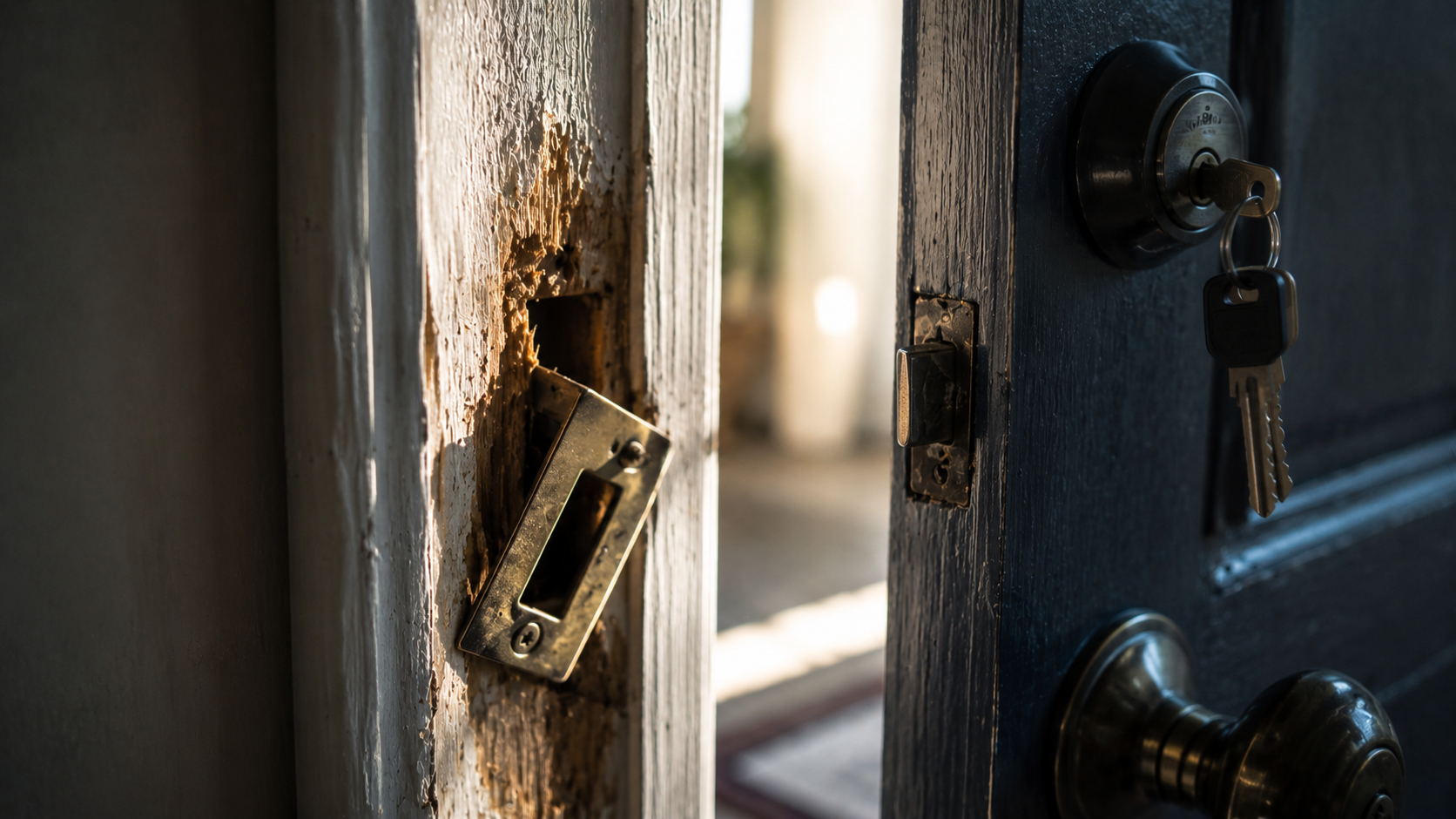
A burglary takes twice. The first loss is what leaves in the intruder's hands. The second unfolds over the following weeks, in the pried door frame and shattered slider, the ransacked rooms, the security upgrades, and an insurance claim where the policyholder discovers that the watch collection was capped at a number chosen decades ago by a policy form, not by the collection.
The base answer is reassuring: standard California homeowners policies cover theft, attempted theft, and vandalism, paying for the stolen contents and for the physical damage the entry caused. The complications live one layer down, in special category limits, in proof of ownership demands that arrive when the proof was stolen along with the property, and in the uncomfortable scrutiny that theft claims draw because they rest on the policyholder's account more than any other loss type.
This article covers the coverage, the caps, and the documentation that carries these claims. Coverage always depends on the specific policy language and the facts of the loss.
Theft coverage reaches personal property stolen from the home, and in most forms, property stolen from you away from the premises, the laptop from the car, the bag from the hotel, subject to the same limits and sometimes tighter ones. Attempted theft counts too: the damage from a break in that netted nothing is still a covered loss. Vandalism coverage pays for malicious damage, graffiti, smashed fixtures, destruction inside the home, whether or not anything was taken.
The structure damage rides under the dwelling coverage: doors, frames, windows, locks damaged in entry get repaired as part of the same claim, and reasonable emergency measures, boarding a broken slider, securing the door tonight, are both a policy duty and a claimable cost. One boundary worth knowing early: standard forms commonly restrict or exclude theft and vandalism coverage where a dwelling has sat vacant for an extended period, a fact pattern that matters for inherited houses, long renovations, and rentals between tenants.
Buried in the personal property section sits a schedule of special limits for theft prone categories: jewelry and watches, furs, firearms, silverware, cash, coins, and securities among them, each capped at figures that are modest by design. A jewelry box holding a generation of pieces can meet a cap smaller than any single ring inside it, and the cap applies per loss, not per item.
Two responses exist, one before the loss and one after. Before: scheduling, adding valuable items to the policy individually, with appraisals, at full value. After a loss, the work is precision, because the caps are category caps and categories have edges. What counts as jewelry versus a collectible, what was business property versus personal, which items were separately scheduled, and what portion of the loss falls outside any capped category are all questions worth answering from the policy's actual definitions rather than the adjuster's sorting. On a large theft, moving even a few significant items to their correct, uncapped or scheduled treatment changes the claim's arithmetic.
Whatever the claim type, the first step is the same. Send the denial letter, the estimate, or just the story. We read your policy, the insurer's position, and the gap between them, then tell you where you stand. There are no upfront fees, and fees come only out of a recovery.
Get my free claim reviewTheft claims draw scrutiny because the central fact, property existed and was taken, rests on the policyholder's proof. Expect ownership documentation requests, sometimes a recorded statement, occasionally on large or flagged losses the formal tools covered elsewhere in this series, an examination under oath and a sworn proof of loss. The response to scrutiny is never volume for its own sake. It is convergence: each significant item supported by the ordinary documents that accumulate around real ownership, the photo, the statement, the service record.
Vandalism disputes run different lines: whether damage was malicious or wear, whether the vacancy restriction applies, and how far restoration goes, matching the surviving surfaces or patching the damaged ones. California's general rules hold on all of it: the carrier owes a real investigation and stated bases for what it declines, exclusions and restrictions read narrowly, and a denial built on skepticism rather than findings is a position, not a verdict. Claims in this category get paid to the standard of their documentation, which is a variable the policyholder controls.
Claim the whole event, not just the missing property. Break ins generate follow on costs that belong on the loss: lock rekeying or replacement throughout, repair of the entry damage to a matching standard, cleanup of what the intrusion ruined, and, where identity documents or cards were taken, the practical costs of the aftermath, which some policies address through their own provisions. A settlement that prices the stolen electronics and skips the damaged door hardware, the rekeying invoice, and the ruined interior finishes has quietly narrowed the covered event to its most convenient slice.
Recovered property has its own etiquette. Stolen items occasionally resurface through pawn databases, online listings, or an arrest, and the policy governs what happens next: typically the policyholder notifies the carrier, and depending on timing, either takes the property back with the claim adjusted or lets the paid carrier take its interest in the recovery. Watching resale listings for distinctive pieces in the weeks after a burglary costs nothing, occasionally works, and every recovery conversation goes better when the serial numbers made it into the police report on day one.
Theft and vandalism files get built around proof architecture: the police report squared with the claim, the stolen property list assembled to fire inventory standard, ownership stacks on the items that carry the value, and the sublimit sorting done from the policy's definitions instead of the carrier's convenience.
Where a carrier has capped what should not be capped, discounted documented ownership, or stretched a vacancy or maintenance theory over a malicious loss, the challenge goes back in writing with the policy language attached. Policyholders only, always, and on these claims the goal is recovery that matches what was actually taken and broken.
Past results do not guarantee a similar outcome. Every claim is different.
Policies commonly require that theft be reported to the police, and practically, the report anchors the claim's credibility and starts any recovery chance for serialized property. File promptly, keep the report number, and if the response was a phone report or online filing, that satisfies the purpose, get the confirmation into the claim file.
Almost certainly a special limit: standard forms cap theft of jewelry and watches at a modest per loss figure unless items were scheduled. The audit worth doing is edge checking, whether every capped item truly belongs in the capped category, whether anything was scheduled, and whether appraisals support treatment the adjuster's sorting missed. Going forward, scheduling is the fix.
It can. Policies commonly limit or exclude theft by residents of the household, and disputes involving estranged partners, roommates, or invited guests turn on the policy's definitions and the facts. These are sensitive files where precision matters more than speed, and where getting advice before giving detailed statements is genuinely wise.
Usually yes, with one watch item: vacancy. If the home sat unoccupied beyond the policy's stated period, theft and vandalism coverage may be restricted, and what counts as vacant versus unoccupied is a definitions question worth reading closely. Renovation projects with regular activity, stored belongings, and utilities on often fall outside true vacancy, and the facts deserve assembling before any restriction gets conceded.
The sublimit sorting, the ownership proof, the police report alignment, and whatever the offer letter got wrong, mapped against the policy's own definitions. Bring the list, the report number, and the correspondence. CaliClaims Law reviews property insurance claims for Southern California policyholders at no cost. One call. That's all.