
CaliClaims Law
one call. that's all
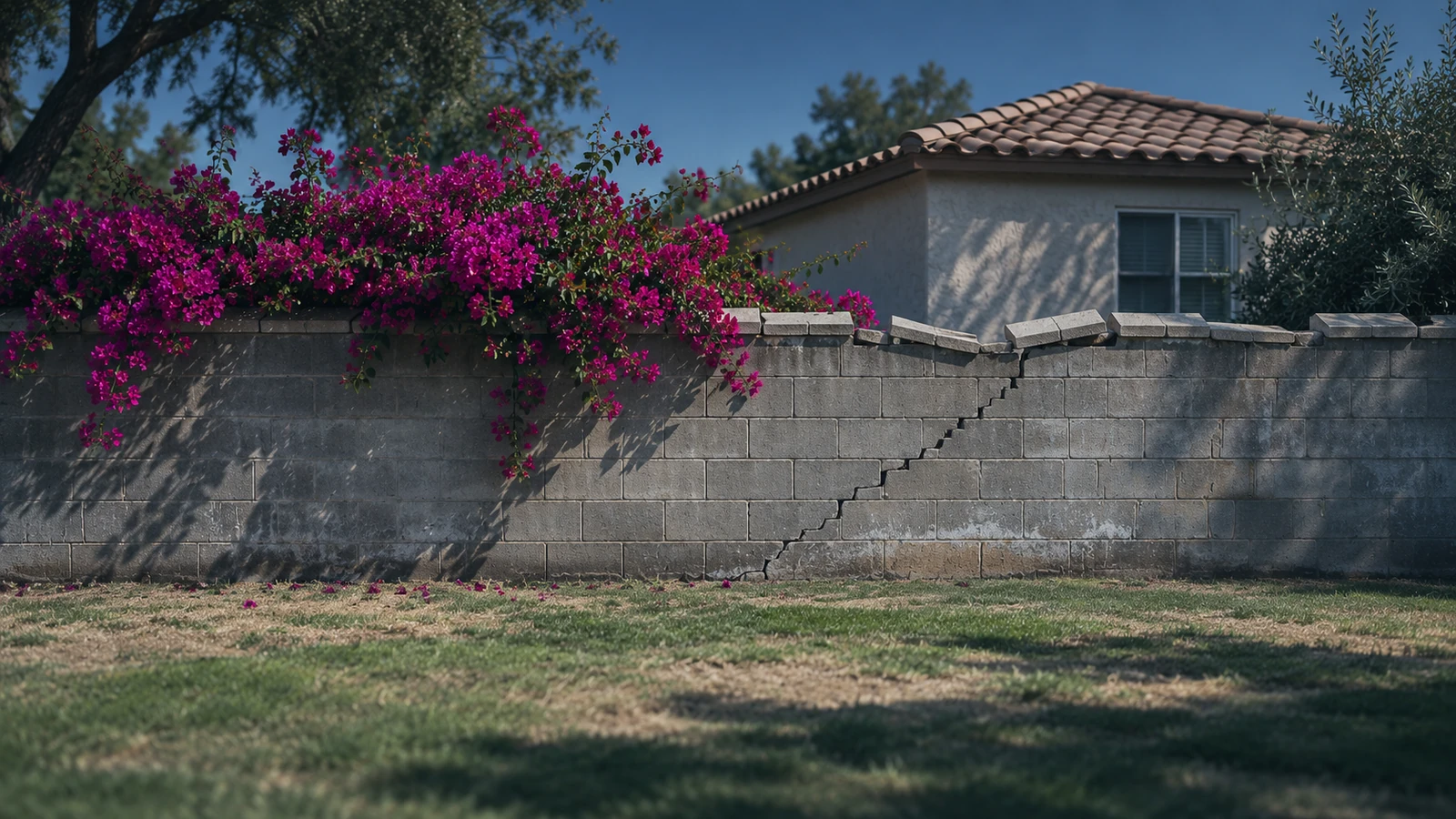
The house is standing. What the wind took was everything around it: forty feet of fence laid flat across the side yard, a cracked section of the block wall along the alley, the pergola roof peeled off and dropped into the pool. Those losses can cost as much to repair as a damaged roof, and on a homeowners policy they are usually paid from a different pot of money, with a different limit, and sometimes with different rules about what counts.
If you're looking at damage to a detached garage, a wall, a fence, a pool structure or a backyard unit, the first question in the claim is which part of the policy it falls under. Other structures coverage is where many Southern California claims quietly lose value, because it is easy to undercount and easy to misclassify.
For your lot, two things set the size of that part of the claim: the Coverage B limit on your declarations page, and which structures the carrier places under it, a question that gets harder when a backyard unit is involved. Coverage always depends on the specific policy language and the facts of the loss.
Other structures coverage, which many forms label Coverage B, generally pays to repair or replace structures on the insured lot that are set apart from the dwelling by clear space. Many standard forms add that a structure connected to the house only by a fence, a utility line or a similar connection still counts as an other structure.
The coverage has its own limit, separate from the dwelling limit. The disclosure statement California requires insurers to give residential policyholders explains that limits for separate structures such as detached garages are usually based on a percentage of the dwelling limit, and the declarations page shows the figure. Read that page, because the number printed there is generally the starting ceiling for this part of the claim, before any endorsement or additional coverage the policy provides.
Most homeowners policies cover other structures against the same perils as the dwelling. Windstorm, fire, smoke, a vehicle through the wall, a falling object and vandalism are generally covered, and the same exclusions follow along: wear and tear, deterioration, settling, termites and rot, earth movement and the water exclusions. The structure behind the house is generally insured against the same storm as the roof, and its claim turns on the same proof of cause.
Fences are generally covered as other structures when a covered peril damages them. A wood fence pushed over by a Santa Ana wind, a vinyl fence crushed by a falling limb, or a wrought iron fence bent by a falling branch are generally Coverage B losses. A fence that leaned for years on rotted posts runs into the wear and tear exclusion, the provision fence claims commonly turn on. Photographs of the posts at the break, and of the fence before the storm, are the evidence on that line.
Block walls and retaining walls are common on Southern California lots, and their length, height and finish all belong in the estimate. A wind or impact loss to a freestanding block wall is generally covered. A retaining wall that fails during heavy rain is harder, because the carrier will look at the earth movement and surface water exclusions, and earthquake damage is generally excluded from a standard homeowners policy without a separate earthquake policy. When a wall fails for more than one reason at once, California's approach to concurrent causes of loss can decide whether the covered cause carries the claim, so the engineering record matters.
Pools and spas generally count as other structures, along with the decking, coping and equipment enclosures built into the lot, though some forms may treat freestanding equipment as personal property. Gazebos, pergolas, detached patio covers, sheds and workshops generally fall under Coverage B too. A patio cover attached to the house is usually part of the dwelling, one of the first classification questions in a storm claim.
What usually does not count matters just as much. Land is generally not insured. Many forms place trees, shrubs and plants under a separate, narrower provision, and tree damage under a California homeowners policy follows its own rules even when the tree lands on a covered structure. Many standard forms also exclude other structures used for business and structures rented or held for rental to someone outside the form's tenant wording, with a carve out for a structure rented as a private garage. That rental exclusion is where the ADU question begins.
Backyard units are common across Southern California lots. Government Code §66313 defines an accessory dwelling unit as an attached or detached residential dwelling unit that provides complete independent living facilities, with permanent provisions for living, sleeping, eating, cooking and sanitation, on the same parcel as the primary home. Government Code §66314 and the sections that follow it set the standards local agencies may apply when they review an ADU application, from size and setbacks to parking. Those statutes govern permitting. They say nothing about how a homeowners policy classifies the unit, and the policy controls the claim.
An ADU that shares a wall with the house, or a converted attached garage, is generally treated as part of the dwelling under most homeowners forms, because the form defines the dwelling to include structures attached to it. The unit then sits under the dwelling limit, and when that limit was never raised for the addition, the claim can become an underinsured dwelling question rather than a Coverage B question. Keep the permit set, the contractor's final invoice and any notice you gave the agent or carrier about the addition.
A detached ADU, including a converted detached garage, generally lands in other structures coverage on a standard homeowners form unless the policy schedules it separately or an endorsement moves it. A living unit with a kitchen, bathroom and its own utilities can cost a large share of what the main house cost, and a Coverage B limit set as a fraction of the dwelling limit may fall well short. Some policies add the unit to the dwelling by endorsement, some schedule it with its own limit, and some leave it under the default limit. The declarations page and endorsements show which.
Rental use is a point an ADU claim can turn on. Government Code §66314 allows an ADU to be rented separately from the primary residence and bars a separate sale except under a separate part of the ADU law, and Government Code §66315 lets a local agency require that rentals run 30 days or longer. On the policy side, many homeowners forms exclude other structures rented or held for rental, with tenant wording that defines whose occupancy is excepted. Whether an ADU tenant falls within that wording on a given form is a question of policy language, and an endorsement or a separate policy may address rental units. The lease, the rental history and what the agent was told at application all become part of the file. Loss of rental income is its own issue: many forms include fair rental value for a part of the residence rented to others, which ties into loss of use coverage.
Unpermitted structures are common on older lots, and permit status alone is not generally listed among a form's exclusions. The trouble comes from three directions: the rebuild may have to meet current codes, shifting cost into ordinance or law coverage and its limits; the carrier may ask whether the unit, or its rental use, was disclosed at application; and the unit's history can be used to argue construction defect rather than a covered event. California has also opened a path for older units: Government Code §66332 bars a local agency from denying a permit for an unpermitted ADU built before January 1, 2020 merely because it violates building standards or ADU rules, unless correcting the violation is necessary to meet the state's substandard building standards. That statute concerns permits, not coverage. In a claim file, the permit history is simply one more record of what was built and when.
Storm and wind claims are commonly reduced by attributing damage to age or maintenance rather than the weather event. That call can determine what gets paid. Send the adjuster's report, the estimate, or the denial letter, and we review your policy alongside the insurer's reasoning. Nothing is owed upfront.
Get my free claim reviewA Coverage B limit that looked generous when the policy was written can be thin on a Southern California lot. A detached garage, a pool with decking, a few hundred feet of block wall, fencing on three sides and a backyard unit can add up to more structure than the default percentage was meant to cover. And if the dwelling limit is low, the limit calculated from it is low too.
Endorsements that raise the other structures limit, or schedule a building with its own amount, appear on some policies, and owners commonly revisit them when they add a pool or finish an ADU, because the policy does not change when the lot does. After a loss the question narrows: what limit the declarations page shows for the policy period, what endorsements were in force, and whether every damaged structure was counted against the right coverage part.
Valuation often follows the same replacement cost terms as the dwelling, so the depreciation applied to an older fence, wall or outbuilding is a line on the estimate worth reading closely. A wall rebuilt to the same height and finish and a fence matched in material and line are scope questions worth putting in writing.
Classification starts on foot. Walk the property line and list every structure, with the coverage part you expect it to fall under: walls, fences, gates, the garage, sheds, the pool and decking, patio covers, the ADU. Photograph each from a distance and up close, including undamaged sections, so the inspector can see where damage begins and ends. Keep receipts for emergency work such as shoring a leaning wall.
Then tie each item to its cause: the wind or rain record for the date, photographs of fresh breaks and pulled fasteners, or the police report for a vehicle or vandalism loss. Where the carrier says a structure was already failing, older photographs and the permit or purchase history answer with documents.
Finally, ask in writing which coverage part the carrier has applied to each structure, and on what policy language. Putting an attached patio cover under Coverage B, or a detached ADU under the dwelling, changes which limit applies, and the classification should be visible on the estimate. The California property insurance claim process runs on written requests and responses. After a windstorm, the causation evidence that supports the roof supports the wall and fence too, and owners commonly present them together as one storm damage claim.
On an other structures file, CaliClaims Law starts by sorting the property: which structures belong to the dwelling, which to Coverage B, which are scheduled or endorsed, and which the carrier left off. The policy and endorsements are read against the actual layout of the lot, and the firm does this work only for owners, never for an insurer.
The firm then builds the record the classification depends on, including the permit history, the construction of any backyard unit and the rental arrangements, and measures the carrier's estimate against the full scope, structure by structure. Owners pay nothing for that first look at the file.
Past results do not guarantee a similar outcome. Every claim is different.
Generally, yes. A garage separated from the house by clear space, or connected only by a fence or utility line, is usually an other structure, covered against the same perils as the house up to the Coverage B limit. A garage sharing a wall with the house is usually part of the dwelling. A converted or rented garage may need a closer look at the policy's rental terms.
Wind damage to a fence is generally covered under other structures coverage, subject to the deductible and the Coverage B limit. The common dispute is whether the wind or the fence's age caused the failure. Photographs of the broken posts and rails, the weather record for the date, and any photos of the fence before the storm are the evidence the dispute usually turns on.
A boundary fence or wall may be shared between neighbors, and each owner's policy may respond to its share of the damage. The survey and the history of who built and maintained the structure help establish ownership.
It depends on how the policy classifies the unit and treats rental use. An attached unit is generally part of the dwelling. A detached unit is generally an other structure, and many forms exclude other structures held for rental, subject to the form's tenant wording, unless an endorsement addresses it. The declarations page, the endorsements and the application answer it for a specific policy.
Yes. The denial or estimate, the declarations page and your photographs are read against the policy for classification, limit and scope. CaliClaims Law reviews property insurance claims for Southern California policyholders at no cost. One call. That's all.